Leave Your Message

2026 Top Communication Radios for Global Buyers?

In 2026, global buyers need Communication Radios that perform beyond the showroom specification. A crowded catalog can hide serious differences. Battery endurance, audio clarity, network coverage, and repair support matter in real workplaces.

John D. Kraus, a pioneering antenna engineer, wrote, “An antenna is a device that radiates or receives radio waves.” That basic principle still matters. A radio with a strong battery can fail inside reinforced concrete buildings. A compact handheld may sound clear outdoors, yet struggle near machinery or crowded ports. Buyers should compare VHF and UHF performance, IP ratings, operating temperature, charging systems, and accessory availability. Small details become expensive problems.

The best models for international buyers should also support regional certification and lawful frequency planning. Compatibility cannot be assumed across borders. Supplier documentation should identify supported bands, warranty terms, firmware policies, and authorized service locations. Independent testing is valuable, especially when manufacturers publish different measurement methods. No ranking is perfect. Field conditions change too quickly.

A practical evaluation should include a warehouse test, a vehicle test, and a low-signal test. Record voice clarity, reconnect time, battery drain, and user comfort. Talk to operators, not only procurement teams. Their feedback often reveals the truth.

This guide compares leading Communication Radios through a buyer-focused lens. It considers reliability, usability, lifecycle value, and global support. Some conclusions may remain debatable. That is intentional. Careful buyers should question impressive claims before placing a large order.

2026 Top Communication Radios for Global Buyers?

What Communication Radios Are and How They Support Global Communication

Communication radios are handheld or vehicle-mounted devices that send voice and limited data through radio frequencies. Unlike mobile phones, they can support direct, group, or repeater-based communication without relying entirely on public networks. This matters in ports, construction sites, warehouses, rural roads, and emergency coordination areas.

The ITU’s Facts and Figures 2024 reports that 5.5 billion people were online, while 2.6 billion remained offline. Mobile coverage is expanding, but coverage gaps still affect remote operations. Communication radios provide a practical backup when cellular signals become weak, congested, or unavailable. Many current systems support digital voice, location data, text messages, and programmable channels. Yet global buyers must check frequency permissions, output power limits, and equipment certification in each target market. One channel plan cannot fit every border.

The GSMA Mobile Economy 2024 report states that mobile technologies and services generated about 6.5 trillion dollars in economic value during 2023. Radios do not replace that infrastructure. They complement it through fast push-to-talk communication and predictable group access. During field testing, clear audio often depends more on antenna placement, terrain, battery condition, and user training than advertised range. That point is easy to overlook. A radio may claim long-distance performance, but concrete walls and hills can reduce it sharply. Buyers should test devices with local users, record dead zones, and review maintenance support. I still consider interoperability an imperfect target, especially when different networks, protocols, and national rules are involved.

Key Radio Types and Technologies for International Buyers

2026 Top Communication Radios for Global Buyers?

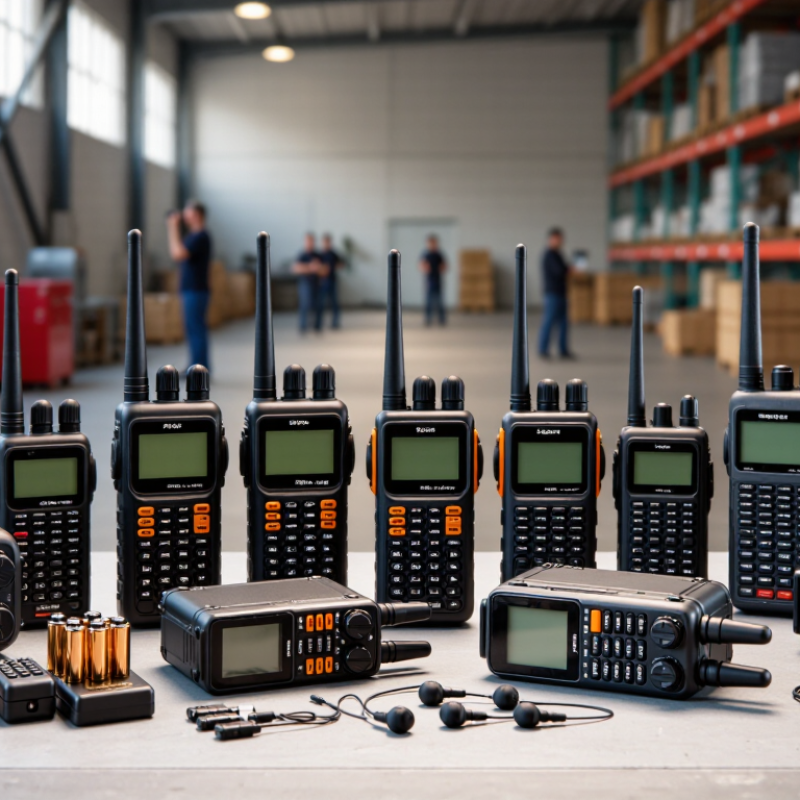
International buyers should begin with radio type, not marketing claims. Handheld radios suit warehouses, construction sites, and field teams. Mobile radios provide stronger coverage in vehicles. Base stations support fixed locations with stable power and better antennas. For remote regions, satellite and cellular push-to-talk systems may extend communication beyond local radio networks.

Analog FM remains simple, affordable, and easy to maintain. Digital radios can improve voice clarity, support group calls, and use spectrum more efficiently. Some systems use time-division technology to serve multiple conversations on one channel. Others connect through LTE or Wi-Fi, but they depend on network availability. Range is not everything. Building walls, hills, weather, antenna height, and battery condition often matter more than advertised distance.

A practical evaluation should test audio beside machinery, inside concrete rooms, and across open ground. Check battery performance after a full work shift. Examine charging ports, emergency controls, waterproof ratings, and accessory availability. Global buyers must verify frequency compatibility, regional certification, transmission power limits, and local licensing requirements before shipment. Documentation should state supported bands clearly. Vague specifications deserve caution. Digital is not always better; it can require more training and troubleshooting. I have seen buyers choose advanced systems, then struggle with setup and maintenance. That mistake is easy to repeat.

Essential Features to Compare Before Choosing a Communication Radio

2026 Top Communication Radios for Global Buyers?

Choosing a communication radio requires more than comparing range claims. In field testing, terrain, buildings, weather, and antenna position changed performance dramatically. Compare realistic coverage reports, not only laboratory distances.

Check frequency compatibility and regional certification before ordering. A radio designed for one market may not operate legally elsewhere. Confirm analog and digital support, channel flexibility, and interoperability with existing equipment. Clear audio matters in noisy warehouses, ports, and outdoor work areas. Test the speaker with gloves on. Small details matter.

Battery performance deserves careful attention. Compare operating hours under actual transmit and standby patterns, not ideal manufacturer figures. Look for replaceable batteries, USB-C or multi-voltage charging, and clear battery indicators. An IP rating helps during rain, but seals can weaken after drops or repairs. That matters.

Durability should include drop testing, temperature tolerance, and accessible controls. Emergency features, location sharing, and remote management may improve safety when used responsibly. However, complicated menus can slow communication during pressure. I prefer radios that remain usable without a phone or network connection. No model is perfect. A lighter unit may have a shorter battery life, while a stronger shell may increase fatigue during long shifts. Review warranty support, manuals, spare parts, and service availability in the destination country. Test it.

2026 Top Communication Radios for Global Buyers

Essential Features to Compare Before Choosing a Communication Radio

Maximum permitted transmitter output varies significantly by radio service and region. Higher power does not automatically guarantee longer range because terrain, antenna design, frequency, interference, and local regulations also affect performance.

Reference basis: FCC Part 95 limits for FRS, GMRS, and CB services, plus the European PMR446 limit under ETSI EN 300 296. PMR446 is shown as ERP, while the other values are transmitter-output limits; these units should not be treated as directly equivalent.

Regional Standards, Frequencies, and Legal Requirements Worldwide

2026 Top Communication Radios for Global Buyers?

Regional Standards, Frequencies, and Legal Requirements Worldwide

A radio that works in one country may be unusable in another. Global buyers should check the destination’s frequency allocation, channel spacing, output power, and certification rules before ordering. In Europe, PMR446 equipment commonly uses the 446 MHz range with strict power and antenna limits. North American personal radio services follow different channel plans and licensing conditions. Australia, Japan, and other markets also apply their own technical standards.

Frequency matters. So does the paperwork.

A warehouse team near Paris may need license-free handheld radios, while a construction crew in Canada may require a licensed service. A portable unit marked “UHF” is not automatically legal everywhere. Buyers should confirm whether the device is approved for transmission, not merely reception. Check local authority databases, accepted certification marks, import documents, and permitted use locations. Maritime and aviation frequencies require special caution and should never be treated as ordinary business channels.

Real-world details often expose weak purchasing decisions. Test radios inside concrete buildings, beside metal shelving, and across busy roads. Confirm battery labeling, charging compatibility, weather protection, and local-language instructions. Some suppliers list broad frequency ranges without explaining regional restrictions. That is a warning sign. Requirements also change, and online summaries can become outdated. A careful buyer should request current compliance evidence from the seller and verify it with the relevant national regulator before deployment.

2026 Top Communication Radios for Global Buyers? - Regional Standards, Frequencies, and Legal Requirements Worldwide
Market or Region Best-Fit Radio Category Commonly Used Frequency Range Typical Power or Operating Limit Primary Technical or Regulatory Framework License Status for Typical Consumer Use Important Legal and Purchasing Requirements
European Union and EEA License-exempt personal mobile radio PMR446: 446.0–446.2 MHz Maximum 0.5 W effective radiated power; integral antenna required ETSI EN 300 296; EU Radio Equipment Directive 2014/53/EU; national spectrum decisions Generally license-exempt Use equipment with valid CE marking and an EU Declaration of Conformity. PMR446 equipment must normally be handheld, short-range, and designed for the harmonized PMR446 channels. Base stations, repeaters, detachable high-gain antennas, and modified transmitters are not permitted for this service.
United Kingdom PMR446 handheld radio 446.0–446.2 MHz Maximum 0.5 W effective radiated power; integral antenna required Ofcom PMR446 interface requirements; UK Radio Equipment Regulations Generally license-exempt Buy equipment intended for the UK market or confirmed to meet the applicable UK conformity requirements. Commercial users needing greater range may require an Ofcom business radio licence and an assigned frequency.
United States Family Radio Service handheld radio; General Mobile Radio Service for extended coverage FRS/GMRS channels around 462.550–462.725 MHz and 467.5625–467.7125 MHz, subject to channel plan FRS power varies by channel, up to 2 W effective radiated power; GMRS equipment and station limits differ by configuration FCC Part 95, Subpart B for FRS and Subpart E for GMRS; certified equipment required FRS generally license-exempt; GMRS requires an individual license Use radios specifically certified for the applicable service. FRS and GMRS are not interchangeable from a licensing perspective. GMRS repeaters, mobile units, and higher-power operation require GMRS authorization and must follow FCC technical rules.
Canada Family radio or general mobile radio handheld radio UHF channels in the 462–467 MHz range, subject to the Canadian channel plan Power and antenna limits depend on the radio service and channel Innovation, Science and Economic Development Canada technical standards, including RSS-210 and applicable licence-exempt or licensed-service rules Depends on service and equipment classification Equipment must be certified for Canada and carry the required certification or registration information. A United States-only radio is not automatically legal for Canadian operation, even when its frequencies appear similar.
Australia UHF Citizens Band radio for personal, outdoor, and commercial short-range use 476.425–477.4125 MHz; 80-channel UHF CB channel plan Typically up to 5 W transmitter power, subject to the class licence and channel conditions ACMA UHF CB Class Licence; applicable Australian radio communications standards Class-licensed and generally no individual licence required Use compliant UHF CB equipment with the correct channel spacing and permitted antenna configuration. Repeaters and duplex channels may be subject to additional conditions. Imported radios must meet Australian conformity and labelling requirements.
New Zealand UHF personal or citizens-band handheld radio Common UHF CB allocations around 476–477 MHz, subject to the New Zealand channel plan Power, channel spacing, and antenna conditions are defined by the applicable general-user radio licence Radio Spectrum Management general-user radio licence and New Zealand conformity requirements Generally covered by a general-user licence Confirm that the radio is approved for New Zealand frequencies rather than relying only on Australian compatibility. Duplex, repeater, and commercial applications may have separate operating conditions.
Japan Specified low-power radio or Japanese licence-exempt short-range transceiver Common categories include designated 400 MHz-band allocations; exact channels depend on the radio class Strictly limited by the specific Japanese radio category; antenna and emissions limits apply Japan Radio Law; Technical Regulations Conformity Certification system Usually licence-exempt only for approved specified low-power equipment Look for Japanese technical conformity certification and the required marking. Radios designed for PMR446, FRS, or other overseas services should not be assumed legal because they operate in a similar UHF range.
China Short-range walkie-talkie or professional land-mobile radio Frequency and channel availability depend on the designated short-range or professional radio service Power, bandwidth, and antenna limits vary by service and approval category Ministry of Industry and Information Technology radio-frequency regulations and applicable SRRC type approval requirements Depends on frequency band, equipment class, and application Commercially imported or marketed transmitting equipment generally needs the applicable Chinese type approval. Do not transmit on amateur, public-safety, aviation, maritime, or professional allocations without the required authorization.
India Short-range walkie-talkie or licensed land-mobile radio Licence-free short-range allocations may include designated UHF bands; exact frequencies and power limits are specified by Indian rules Varies by licence-free category; professional systems normally require assigned frequencies Wireless Planning and Coordination requirements; Equipment Type Approval where applicable; Indian licence conditions Licence status depends on the exact band and equipment Verify the current WPC allocation before import or use. A radio that is licence-free in Europe or North America may require approval or a wireless operating licence in India. Frequency, power, bandwidth, and antenna specifications must match the permitted category.
Brazil Personal short-range radio or authorised professional land-mobile radio Frequency depends on the approved service; UHF personal-radio allocations are not automatically equivalent to North American or European channel plans Determined by the applicable Brazilian service and technical approval ANATEL homologation and Brazilian frequency-allocation regulations Depends on service and homologated equipment Transmitters generally require ANATEL homologation before legal sale or operation. Check the label, homologation record, frequency range, bandwidth, and permitted power before importing professional or licence-exempt radios.
United Arab Emirates and Gulf Markets Licence-exempt short-range radio or individually authorised professional radio Depends on the national short-range-device and land-mobile allocations; PMR446 availability may be subject to local implementation Power, antenna, and channel conditions are set by the national telecommunications regulator National spectrum regulations, equipment type approval, and local telecom authority requirements Verify locally before use Import approval and local registration may be required, particularly for commercial, security, event, marine, or aviation-related use. Do not rely solely on CE, FCC, or other foreign approval marks.
South Africa Short-range personal radio or licensed professional two-way radio Frequency depends on the approved service and national frequency plan Power and channel access depend on the relevant licence-exempt or licensed category Independent Communications Authority of South Africa regulations; type approval and spectrum licensing requirements Depends on service and operating conditions Confirm equipment type approval and the local frequency allocation. Professional, repeater, security, and business systems normally require an assigned frequency or appropriate radio-frequency licence.
International travel and cross-border use Multi-region travel radio with selectable regional profiles Must use the legally permitted channels in the country where the radio is operating Must remain within the destination country's power, bandwidth, antenna, and duty-cycle limits Destination-country spectrum rules always take priority over the manufacturer's international feature list Country-specific verification required A radio may contain a frequency range that is legal in one country but prohibited or licensed in another. Before travel, disable non-permitted channels and features, carry conformity documentation, and confirm customs and operating rules for each destination.

Regulatory requirements can change by country, territory, frequency sub-band, equipment class, and operating purpose. Buyers should verify the current national spectrum plan, conformity approval, licence conditions, and permitted channels before importing, selling, or transmitting with any communication radio.

How to Select the Best Communication Radio for Different Use Cases

2026 Top Communication Radios for Global Buyers?

How to Select the Best Communication Radio for Different Use Cases

In 2026, global buyers should choose communication radios by working conditions, not attractive specifications. Start with coverage needs, terrain, user numbers, and expected talk time. Urban teams may need clear audio through concrete walls. Rural crews often require stronger outdoor range and durable batteries. Ask for measured range in similar environments. Marketing claims can mislead.

For construction sites, select radios with impact resistance, loud speakers, and simple controls. Emergency teams may value fast channel access, location features, and dependable charging options. Marine or outdoor users should check water resistance and corrosion protection. Confirm local frequency rules, certification requirements, and permitted operating bands before importing equipment. A powerful radio is not automatically a suitable radio.

Tips: Test two units in the real workplace before ordering in volume. Walk behind walls, climb stairs, and measure battery life during a full shift. Check whether gloves allow easy button operation. Keep spare batteries away from extreme heat. Document failures, not only successful tests. No choice is perfect. A longer range may increase size, weight, or cost, and that trade-off deserves honest review.