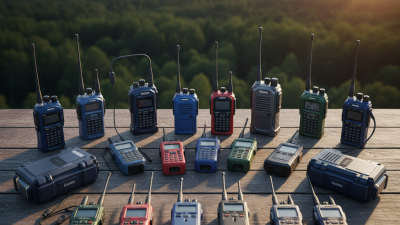
Choosing the right Walkie Talkie Set is less about advertised range and more about dependable performance. Buyers need clear audio, battery endurance, rugged construction, and regional compatibility. A radio that works across a quiet warehouse may fail beside concrete walls, crowded roads, or wet hiking trails. Range claims often assume open terrain. Real conditions are messier.
Market evidence still shows strong demand. Grand View Research valued the global two-way radio market at approximately USD 10.79 billion in 2023. It forecasts continued growth through 2030, supported by logistics, hospitality, public safety, construction, and outdoor recreation. MarketsandMarkets also expects steady expansion, driven by digital radio adoption and connected workplace communications. These figures are useful, but they do not automatically identify the best product. Reports can simplify practical differences between a family radio, commercial handheld, and emergency-oriented model.
Motorola Solutions’ former chairman and CEO Greg Brown described the company’s purpose this way: “Our mission is to help people be their best in the moments that matter most.” That principle fits radio buying well. Communication must remain usable when phones lose coverage, gloves reduce dexterity, or noise overwhelms a speaker. This guide compares ten leading options for global buyers, including audio quality, operating time, durability, charging design, accessory support, and regional frequency considerations. Some rankings remain subjective. User priorities differ. A low-cost Walkie Talkie Set may be ideal for a campsite, yet unsuitable for a busy worksite. The final choice should match the environment, not merely the brochure.
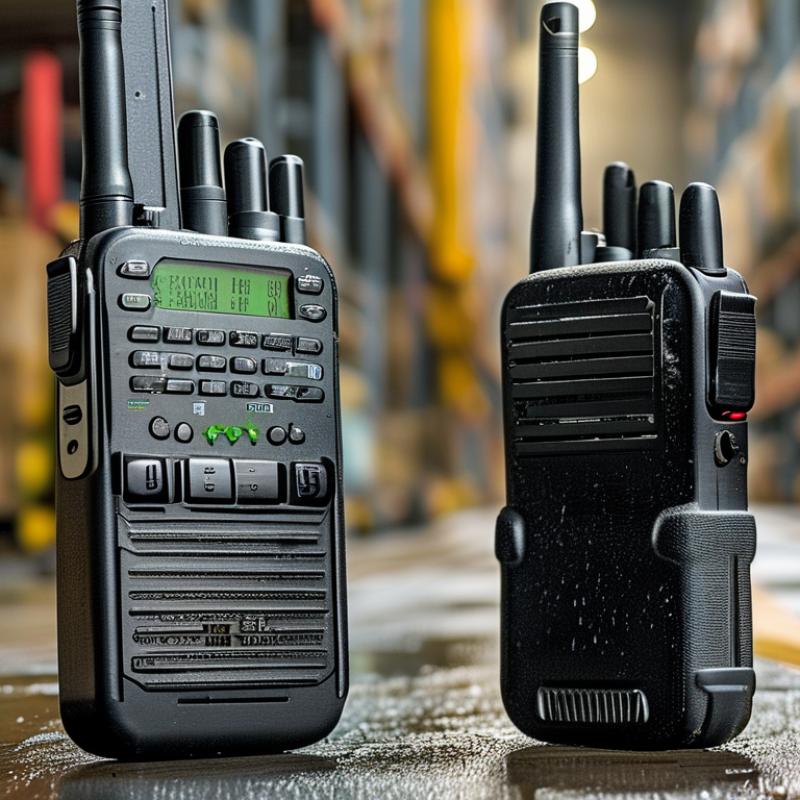
Buying walkie-talkie sets for international use requires more than comparing advertised range. Radio frequencies, power limits, and licensing rules differ between countries. Check the destination authority before placing a bulk order. A model accepted at home may need approval elsewhere. This is easy to miss. Ask the supplier for test reports, conformity documents, and clear frequency specifications. Do not rely on vague claims such as “worldwide coverage.” Actual range depends on buildings, hills, weather, and antenna placement. In a busy city, two kilometers may be optimistic. In open farmland, the same set may perform better. Test a sample outdoors and indoors before ordering hundreds of units.
Global buyers should also inspect durability and daily handling. An IP rating can help, but it does not guarantee survival after drops or saltwater exposure. Check battery chemistry, charging voltage, plug options, and replacement battery availability. A mixed group may need simple controls, loud audio, and multilingual instructions. Emergency channels and privacy features require careful understanding. Privacy codes do not make conversations truly private. Keep purchase records and verify warranty support across borders. Import taxes, repair shipping, and delayed spare parts can change the real cost. Field testing often shows that cheaper sets become expensive when batteries fail early. That lesson deserves testing, not assumption. Leave room for honest uncertainty. Signal performance may vary more than a product sheet suggests.
Choosing a walkie-talkie set for global use requires more than reading the advertised range. Range changes with hills, concrete walls, trees, and crowded city streets. A useful comparison tests every model in the same location, with the same battery condition. Published distances can feel optimistic.
Audio quality matters during wind, traffic, or heavy rain. Look for clear speakers, adjustable volume, and microphones that reduce background noise. Channel access should feel simple, even with gloves. Some sets offer many channels, but extra channels are not always useful. Reliable scanning and privacy settings may matter more.
Battery performance deserves careful checking. Compare charging time, standby duration, and replaceable battery options. A screen showing remaining power is helpful during long outdoor work. Water and dust resistance should match the intended environment, not just a marketing claim. Small details count.
Global buyers should also check regional frequency rules, power limits, and permitted channel use before purchase. A technically strong radio may not be suitable in every country. Manuals should explain these limits clearly. Certifications and warranty support add confidence, although paperwork does not replace real testing. Test controls in low light, check the belt clip, and listen for audio distortion at maximum volume. Personal experience can reveal weaknesses that product charts miss.
For global buyers, the “best” walkie-talkie set depends on local spectrum rules. In the United States, Family Radio Service equipment uses 22 authorized channels under FCC Part 95. General Mobile Radio Service offers greater range, but requires an individual license. Europe commonly uses PMR446, covering 446.0–446.2 MHz under CEPT ECC Decision (15)05. These radios generally require fixed antennas and limited power.
Australia follows a different path. Its UHF Citizens Band occupies 476.425–477.400 MHz, according to the Australian Communications and Media Authority. That frequency range is not interchangeable with PMR446. Japan, Canada, and several other markets also apply separate approvals. A radio can receive signals abroad yet remain unauthorized to transmit. That detail is easy to miss.
Tips: Check the regulator before buying. Look for FCC, CE, UKCA, ACMA, or equivalent approval marks. Confirm the exact frequency range, power limit, antenna design, and licensing requirement. Avoid imported “multi-band” models without local certification. In field testing, advertised range often fell sharply behind buildings and wet forest. I once assumed more channels meant better communication; terrain proved otherwise. The ITU Radio Regulations remain useful, but national rules control real-world use. Keep the manual and conformity documents with the equipment.
License-exempt walkie-talkie rules vary considerably by region. The chart compares the maximum permitted power of widely used personal-radio services; higher power does not guarantee better range because terrain, antenna design, and local restrictions also matter.
Reference examples: PMR446 in Europe and the UK uses 446 MHz with a 0.5 W ERP limit; US FRS permits up to 2 W on higher-power channels and 0.5 W on channels 8–14; Australian and New Zealand UHF CB services commonly permit up to 5 W; China’s 409 MHz personal-radio service is limited to 0.5 W; Japan’s specified low-power radio service is typically limited to 10 mW. Always confirm current national certification, frequency, channel, and antenna requirements before importing or using a radio.
The 10 Best Walkie-Talkie Sets for Different User Needs
Walkie-talkie sets should match the user, not the advertisement. Grand View Research valued the global two-way radio market at about USD 9.1 billion in 2023. It also projects steady growth through 2030. That growth reflects demand from logistics, public events, construction, travel, and outdoor recreation. Still, market growth does not guarantee a suitable radio.
For family trips, choose a lightweight pair with simple controls, rechargeable batteries, and a clear screen. Hikers need weather resistance, strong audio, and a belt clip that survives rough movement. Event teams benefit from headsets, channel scanning, and long standby time. Industrial users should prioritize an IP-rated housing, impact resistance, and compatibility with approved local frequencies. The IEC 60529 standard defines IP protection levels, but sellers sometimes explain them poorly. Check the actual rating.
Range claims need careful judgment. A “30-mile” estimate usually assumes open terrain and excellent conditions. Buildings, hills, trees, and crowded areas can reduce it sharply. Think two miles, not thirty. The European Telecommunications Standards Institute specifies PMR446 requirements for many consumer radios in Europe. Other regions may use different rules, such as FRS or GMRS frameworks. Buyers should verify permitted frequencies, power limits, and licensing before ordering. NOAA weather alerts can help outdoor users in supported areas, although radio coverage remains imperfect. A longer battery may matter more than extra channels. I learned that after carrying a set with impressive specifications but weak audio.
| # | Recommended Set Type | Best For | Typical Regulatory Class | Operating Band | Channels | Typical Transmit Power | Practical Range | Battery Profile | Weather Protection | Typical Weight per Radio | Key Buying Consideration |
|---|---|---|---|---|---|---|---|---|---|---|---|
| 1 | Compact License-Free Family Set | Family trips, parks and basic communication Easy to use |
License-free consumer service; rules vary by country | Regional license-free UHF allocation | 8–22 channels | Approximately 0.5–2 W, depending on local rules | 0.5–2 km in built-up areas; up to 3–8 km in open terrain | Rechargeable lithium-ion or 3–4 AAA batteries; typically 8–18 hours | Usually splash-resistant; commonly rated around IP54 | 120–200 g including battery | Choose a version approved for the destination country. Range claims are normally based on unobstructed conditions. |
| 2 | Long-Range GMRS-Style Set | Rural travel, farms and large properties | Higher-power personal radio service; may require a license | Around 462–467 MHz in the United States | Typically 22 shared or service channels | Up to approximately 5 W handheld output where permitted | 1–5 km in normal terrain; longer with elevated position | Rechargeable battery; typically 12–24 hours | Commonly IP54–IP67, depending on model | 180–300 g including battery | Not a universal global standard. Confirm licensing, channel allocation and permitted power before import or use. |
| 3 | European PMR446 Set | European travel, events and recreational use | PMR446 license-exempt service in applicable European markets | 446.0–446.2 MHz | Up to 16 analog or digital channel positions | Maximum 0.5 W effective radiated power | 0.5–2 km in towns; approximately 2–8 km in open areas | Rechargeable lithium-ion or removable cells; typically 10–20 hours | Often IP54 or IP55 | 150–250 g including battery | The antenna must be integral under PMR446 rules. Equipment designed for another region may not be legal on these frequencies. |
| 4 | Rugged IP67 Outdoor Set | Hiking, camping and wet-weather activities Best weather protection |
License-free or licensed, depending on the regional frequency plan | Usually UHF for general consumer versions | 16–32 channels | Approximately 0.5–5 W, subject to local authorization | 1–4 km in forests or uneven terrain; more in open areas | High-capacity rechargeable battery; typically 18–30 hours | IP67: dust-tight and temporarily submersible under test conditions | 220–350 g including battery | IP ratings describe water and dust resistance, not impact resistance, floating ability or protection against saltwater corrosion. |
| 5 | Business UHF Handheld Set | Retail, hospitality, warehouses and security teams | Licensed business or professional land-mobile radio | Typically 400–470 MHz, subject to national allocation | 16–256 programmable channels | Approximately 1–5 W handheld output | 1–5 km in urban or industrial environments | Replaceable battery; typically 12–24 hours per charge | Commonly IP54–IP68 in professional equipment | 230–400 g including battery | Frequency coordination, licensing and programming are normally required. UHF generally performs well inside buildings. |
| 6 | Digital DMR-Style Workgroup Set | Large teams needing clearer audio and efficient channel use | Licensed digital land-mobile radio system | VHF or UHF, commonly within 136–174 MHz or 400–470 MHz | Multiple programmed talk groups; two-slot digital operation is common | Approximately 1–5 W handheld output | 2–8 km, strongly dependent on antenna height and terrain | Digital battery management; typically 16–28 hours | Often IP55–IP68 | 250–450 g including battery | Requires compatible programming and network planning. Digital operation does not eliminate coverage limits or licensing obligations. |
| 7 | VHF Open-Terrain Set | Rural sites, open fields and outdoor operations | Licensed land-mobile radio service | Typically 136–174 MHz | 16–128 programmable channels | Approximately 1–5 W handheld output | 2–8 km in open terrain; less in dense urban areas | High-capacity removable battery; typically 12–24 hours | Commonly IP54–IP67 | 230–400 g including battery | VHF can offer useful outdoor coverage, but performance depends on antenna design, terrain, licensing and local interference. |
| 8 | Family Radio Set with Emergency Features | Road trips, festivals and basic emergency preparedness | License-free consumer service where approved | Region-specific UHF consumer allocation | 8–22 channels with privacy-code options | Typically 0.5–2 W, depending on the national service | 0.5–3 km in typical use | Rechargeable battery; often 10–20 hours with standby operation | Usually IP54; some models provide higher protection | 150–280 g including battery | Useful features may include weather alerts, LED light, USB charging and hands-free operation. These functions do not replace an emergency beacon. |
| 9 | License-Free Construction-Ready Set | Small job sites, contractors and temporary crews | Regional license-free or low-power business service | Usually UHF for better building penetration | 16–32 channels | Approximately 0.5–2 W where permitted | 0.5–2 km around buildings and machinery | Replaceable or rechargeable battery; typically 12–20 hours | Prefer IP55 or higher; dust protection is important | 200–350 g including battery | Prioritize loud audio, simple controls, glove-friendly buttons, belt clips and spare batteries over maximum advertised range. |
| 10 | Travel-Friendly Multi-Region Set | International buyers who travel between regulatory regions Best portability |
Country-specific approval required; no single license-free standard is global | Selectable regional versions only; avoid unauthorized wideband operation | 8–32 channels, depending on the approved version | Typically 0.5–2 W for license-free models | 0.5–3 km in ordinary conditions | USB-C or cradle charging; typically 10–24 hours | Usually IP54–IP67 | 150–300 g including battery | Buy a locally approved version for each destination. Check frequency, power, antenna, channel and licensing requirements before use. |
Note: Practical range, battery life and audio performance vary with terrain, buildings, vegetation, weather, antenna position, traffic and battery condition. Always verify the radio regulations of the country where the equipment will be used.
Buying a walkie-talkie set worldwide requires more than comparing range claims. A 2024 MarketsandMarkets report estimated the global two-way radio market at roughly US$9 billion in 2023, showing strong demand across business, travel, and public-service sectors. Yet advertised range often assumes open terrain. Buildings, hills, weather, and antenna position can reduce performance sharply.
Check the permitted frequency bands before ordering. National regulators assign radio channels differently, and some devices require individual authorization. The ITU Radio Regulations provide the global framework, but local rules still control everyday use. Choose clear controls, readable displays, and replaceable batteries. An IP rating under IEC 60529 also matters near rain, dust, or campsite mud. Test the radio at your actual location, not only in a showroom.
Use a charging routine that matches the battery type. Heat damages batteries, so avoid leaving units inside a hot vehicle. Clean contacts with a dry cloth and inspect seals after drops. Keep one spare battery per active user. Simple planning helps.
I once trusted a “long-range” label too much. Walls proved more persuasive than the brochure. Record channel settings, charging dates, and observed range during monthly checks. The data may expose weak coverage early. For larger teams, written procedures and periodic user training reduce confusion, especially when several groups share the same site. Sources: MarketsandMarkets, Two-Way Radio Market Report, 2024; International Telecommunication Union, Radio Regulations; International Electrotechnical Commission, IEC 60529.