How to Choose the Best Walkie Talkies for Your Needs?
In today's fast-paced world, choosing the right Walkie Talkies can be challenging. With numerous models and features available, it's crucial to know what best suits your needs. According to industry expert John Anderson, "The right Walkie Talkies can transform communication, especially in remote areas." This highlights the importance of careful selection.
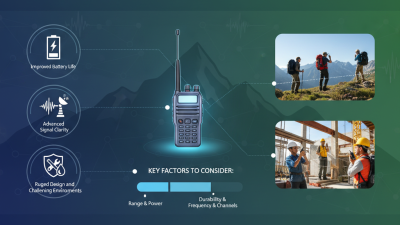
Reports indicate that the global Walkie Talkies market is projected to reach $3.15 billion by 2027, with a growing demand in recreational and commercial sectors. Effective communication is vital in various settings. Whether for hiking, emergency services, or construction sites, the right pair can enhance coordination and safety. However, many consumers often overlook key features, such as range, battery life, and durability.
It can be overwhelming to navigate the vast options. Some might favor compact designs, while others prioritize advanced functions. This diversity shows the importance of assessing personal needs. Choosing Walkie Talkies incorrectly can lead to frustration. Therefore, thorough research is necessary. By understanding specific requirements, users can make informed decisions, ensuring reliable connections when they matter most.

Understanding Your Communication Needs
When choosing walkie talkies, it’s crucial to assess your communication needs. Think about the environments you’ll use them in. For instance, are you in a densely wooded area, or do you need to communicate across a large farm? These factors influence the type of walkie talkie you should consider. Understand the range you require. More range often equals more power, which can lead to battery drain.
Battery life is another aspect to ponder. Some devices run out quickly, especially with continuous use. This consideration can be frustrating during long trips or events. You may want to explore options that allow for rechargeable batteries or even solar power. Also, the number of channels is significant. Fewer channels may lead to interference, while more channels provide clearer communication among teams.
Don’t overlook durability either. Walkie talkies can be subjected to tough conditions. Shockproof and waterproof features can save you money in the long run. It's easy to get lost in specifications. Sometimes we focus too much on features, forgetting the actual usage. Reflecting on past experiences can guide your choices. Were you ever left out of the loop because of poor communication tools?
How to Choose the Best Walkie Talkies for Your Needs?
| Feature |
Description |
Recommended Usage |
| Range |
Distance over which the device can communicate effectively. |
Outdoor activities, large events. |
| Battery Life |
Duration the device can operate before needing a recharge. |
Extended trips, emergencies. |
| Durability |
Ability to withstand harsh conditions, such as moisture or drops. |
Construction sites, outdoor adventures. |
| Channels |
Number of communication channels available for use. |
Large groups, crowded areas. |
| Private Communication |
Features like CTCSS or DCS to avoid interference. |
Sensitive operations, security use. |
| Weight |
Portability and comfort during long use. |
Hiking, camping. |
Exploring Different Types of Walkie Talkies
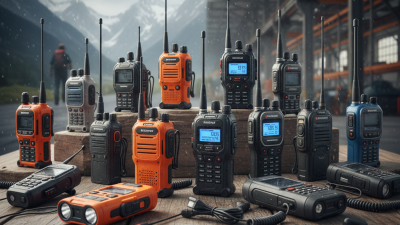
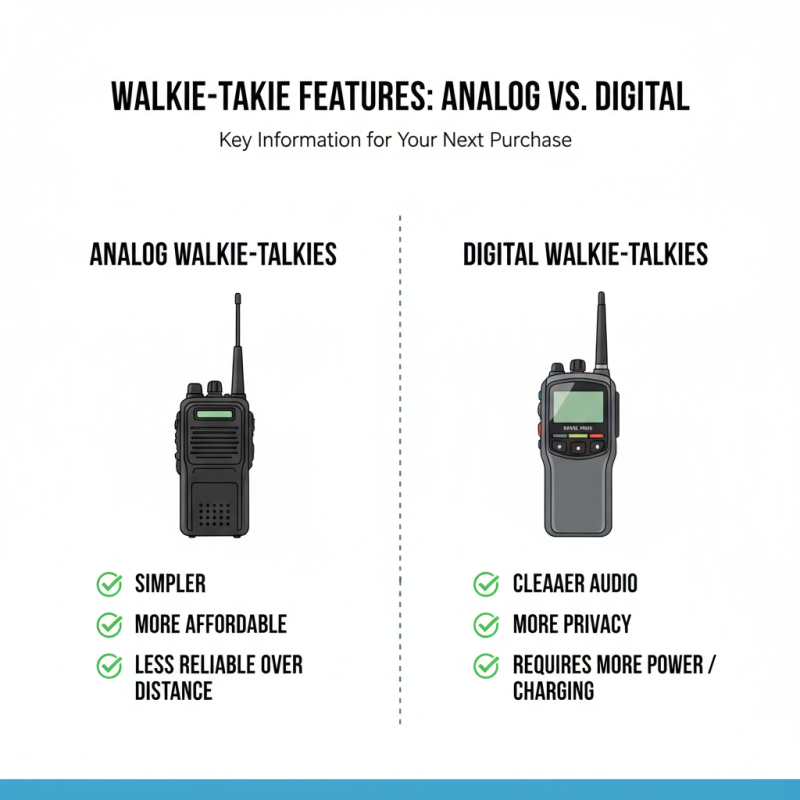
When exploring different types of walkie talkies, it's crucial to consider their unique features. First, you might look at analog versus digital. Analog models are usually simpler and more affordable. However, they can be less reliable over long distances. Digital units often provide clearer audio and more privacy options. But, they may require more power, which means frequent charging.
Range and battery life are essential factors. Some walkie talkies offer a range of a few miles, while others extend to over 30 miles. If your activities require long distances, prioritize range. Battery life can also vary. Models with rechargeable batteries might perform well, but they need access to charging stations. It's frustrating when a device dies unexpectedly.
Consider the environment where you'll use the walkie talkies. Waterproof and rugged designs are better for outdoor adventures. Meanwhile, lightweight options suit casual outings. Reflect on your communication needs; one group might need a simple device, while another might require advanced features. Choosing the right type can be challenging but essential for effective communication.
Key Features to Consider When Choosing
When selecting a walkie talkie, several key features play a crucial role. Range is important. You want to ensure clear communication over the distance you need. Consider how far apart you'll be from your group. Some devices may promise long ranges, but real-world conditions can reduce this significantly.
Battery life is another vital element. A device that requires frequent charging may not serve you well. Look for options that offer extended usage times. This can be particularly helpful in outdoor settings where power sources are scarce. Ergonomics also matter. A device needs to feel comfortable in your hand, especially during long use.
Lastly, look for durability features. Water resistance can be critical in unpredictable weather. A rugged build can protect against drops and bumps. Remember, not all features are necessary for everyone. Personal needs can vary widely. Asking friends about their experiences can shape your decision.
Key Features to Consider When Choosing Walkie Talkies
Evaluating Range and Battery Life
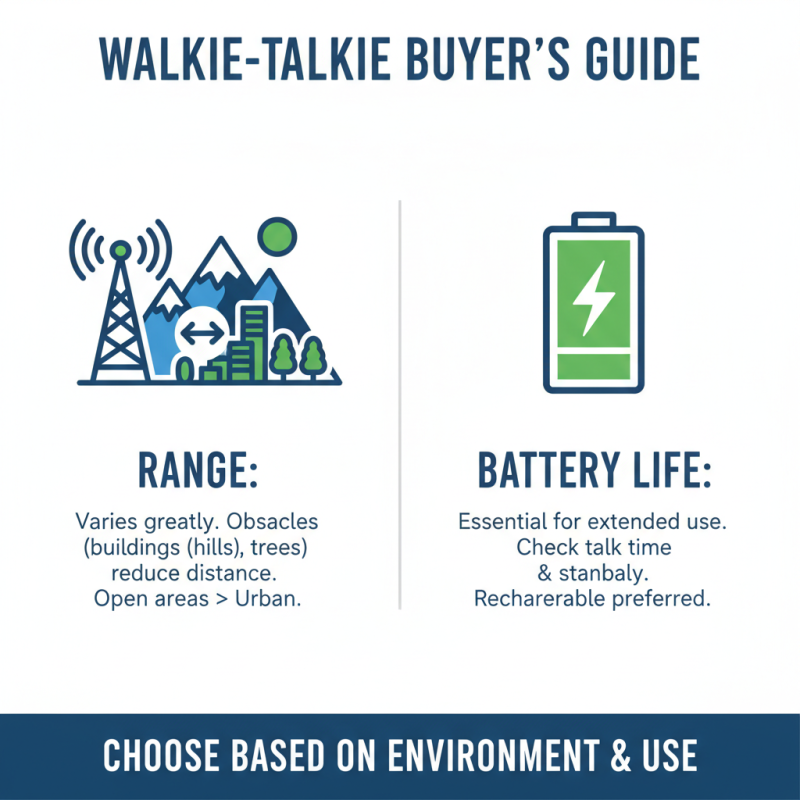
When choosing walkie talkies, range and battery life are crucial factors. The range determines how far apart you can be while still communicating clearly. Typically, walkie talkies list their range as an ideal distance, but this can vary greatly. Buildings, hills, and trees can reduce this range significantly. It's essential to consider your environment. A model that works well in flat, open areas may not perform the same in urban settings.
Battery life is another important consideration. A device with a short battery life can quickly become useless. Look for models that offer long-lasting batteries. Rechargeable options are convenient, but they need to be charged regularly. Are you planning a long hike or an event? Think about how frequently you will use the walkie talkies. Choosing a model that balances range and battery life is key. Also, consider if you will need to carry spare batteries or a charger.
Budget Considerations for Walkie Talkies
When selecting walkie talkies, budget is a primary factor. Research indicates that affordable options range from $30 to $100 per unit. These devices often provide basic functionalities, suitable for casual use. However, investing too little may mean sacrificing range and battery life.
Higher-end walkie talkies can cost over $200. They may offer advanced features like noise cancellation and longer battery life. Many reports indicate that users felt significant satisfaction from these more expensive models. Features were clear and the communication range was impressive.
Consider the intended use. For outdoor adventures, reliable and durable models are crucial. Yet, these often come with a higher price tag. Some users regret not investing more upfront. They found that cheaper models couldn't handle their demands, leading to frustration. Ensure to assess your needs carefully before making a purchase.