What is Handheld Amateur Radio and How Does It Work?
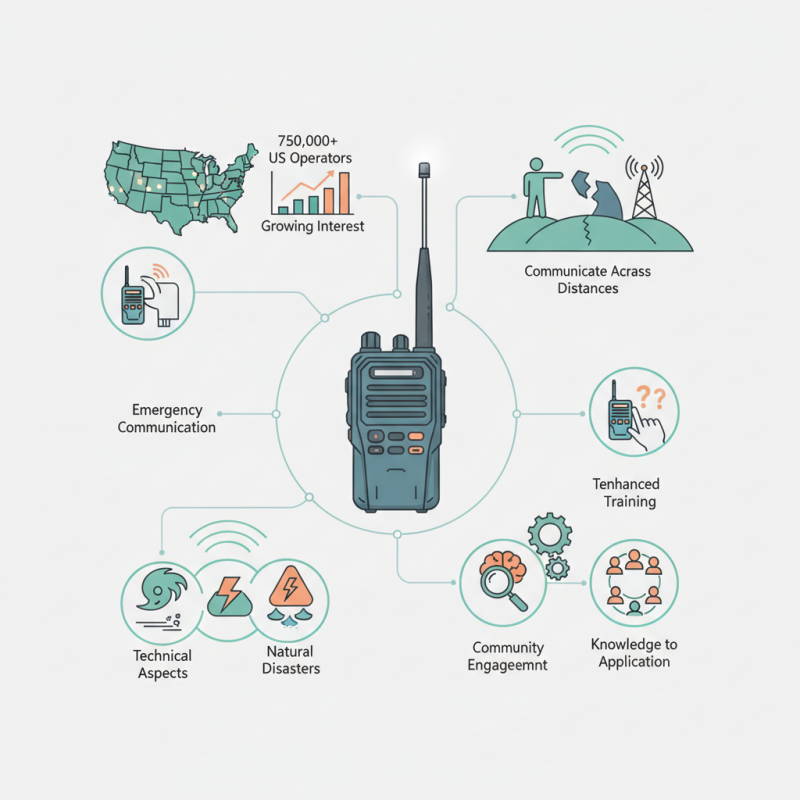
Handheld Amateur Radio, often referred to as "ham radio," plays a significant role in emergency communication. According to the ARRL (American Radio Relay League), there are over 750,000 licensed amateur radio operators in the United States alone. This number is steadily increasing, demonstrating the growing interest in this field.
These devices allow users to communicate over various frequencies, facilitating connections across distances. They are vital in emergencies where traditional communication may fail. For instance, during natural disasters, handheld amateur radios provide crucial information. Their portable nature enhances flexibility in communication. However, certain challenges remain. Many users may not fully understand the technical aspects needed for effective operation.
Additionally, without regular practice, operators might struggle to use their equipment efficiently. This creates a gap between knowledge and application. Improving understanding of Handheld Amateur Radio can empower more individuals to utilize this vital tool effectively. Enhanced training and community engagement could bridge these gaps, ensuring that more people are prepared when it matters most.
What is Handheld Amateur Radio?
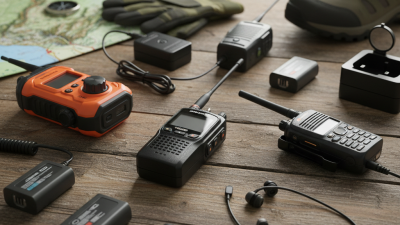
Handheld amateur radio is a portable communication device. It allows users to transmit and receive radio signals. This type of radio is popular among hobbyists and emergency responders. The convenience of handheld models makes them accessible for various situations. They are lightweight and easy to carry around, perfect for outdoor activities.
Using handheld amateur radios involves a few essential steps. Users need to tune to the correct frequency. A clear understanding of the radio bands is important. It enables better communication with others. The operation is generally straightforward. However, new users might find it challenging at first. They need to practice and familiarize themselves with the functions of their device.
Tips for effective use: Always check battery levels before heading out. Keep an extra battery on hand. It’s frustrating to lose contact due to a dead battery. Another tip is to learn basic radio etiquette. Speaking clearly and using concise language improves communication quality. Experiment with different frequencies to find the best fit for your needs. It’s a journey to discover the best practices in handheld amateur radio usage. The learning curve may be steep, but the rewards are well worth the effort.
Key Components of Handheld Radios
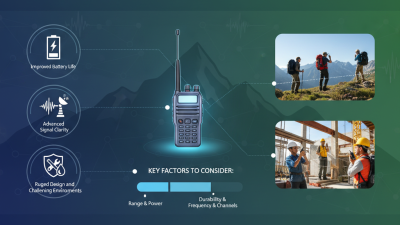
Handheld amateur radios are unique tools for communication. They consist of several key components that enable their functionality. The main parts include the transceiver, power source, antenna, and speaker. Each plays a vital role in how the radio operates.
The transceiver combines the functions of a transmitter and receiver. It converts sound into radio waves and back again. A good power source, like a rechargeable battery, keeps the radio operational in the field. The antenna is often overlooked, but its length and type can significantly affect communication range.
Tip: Always check battery levels before heading out. Ensuring your radio is powered can save you from unexpected communication failures.
A speaker allows users to hear incoming signals clearly. However, poor audio quality can frustrate users. Sometimes, adjusting the volume or using external speakers can enhance clarity.
Tip: Experiment with different antennas. A simple swap can sometimes yield surprising results in signal strength. Handheld radios are powerful yet can be tricky to master. Practice is key to understanding their full potential.
How Handheld Radios Transmit and Receive Signals
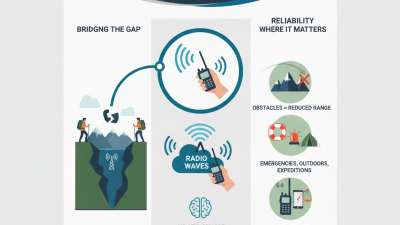
Handheld amateur radios are fascinating tools for communication. They work by transmitting and receiving signals through radio waves. These radios operate on various frequency bands. Commonly, they use VHF (Very High Frequency) and UHF (Ultra High Frequency) bands. According to industry reports, VHF and UHF bands make up about 60% of all amateur radio operations globally.
When a user speaks into a handheld radio, the device converts their voice into electrical signals. These signals are then modulated onto a carrier frequency. This process allows the voice signal to travel over long distances. The antenna plays a crucial role here. A well-designed antenna can improve clarity and range. It's worth noting that many users experience signal loss and interference. This can lead to frustrating communication issues.
Receiving signals is equally interesting. The handheld radio's receiver captures incoming radio waves. It demodulates these waves back into audio signals. However, obstacles like buildings and trees can distort these signals. Reports indicate that users should consider their surroundings for optimal communication. Understanding these factors can lead to better usage of handheld radios. Enthusiasts often reflect on these challenges, seeking solutions to enhance their experience.
What is Handheld Amateur Radio and How Does It Work?
| Feature |
Description |
| Frequency Range |
Typically operates on VHF (30-300 MHz) and UHF (300 MHz - 3 GHz) bands. |
| Power Output |
Power output can vary from 0.5W to 5W depending on the model. |
| Modulation Types |
Common modulation methods include FM, AM, and SSB. |
| Battery Life |
Battery life typically ranges from 8 to 24 hours based on usage. |
| Weight |
Most handheld radios weigh between 0.5 to 1.5 pounds. |
| Key Features |
Features may include emergency alerts, weather updates, and programmable channels. |
| Typical Uses |
Commonly used for outdoor activities, emergency communications, and amateur radio operations. |
| Licensing Requirements |
Users typically need to obtain a technician class amateur radio license to operate legally. |
Understanding Frequency and Bandwidth in Amateur Radio
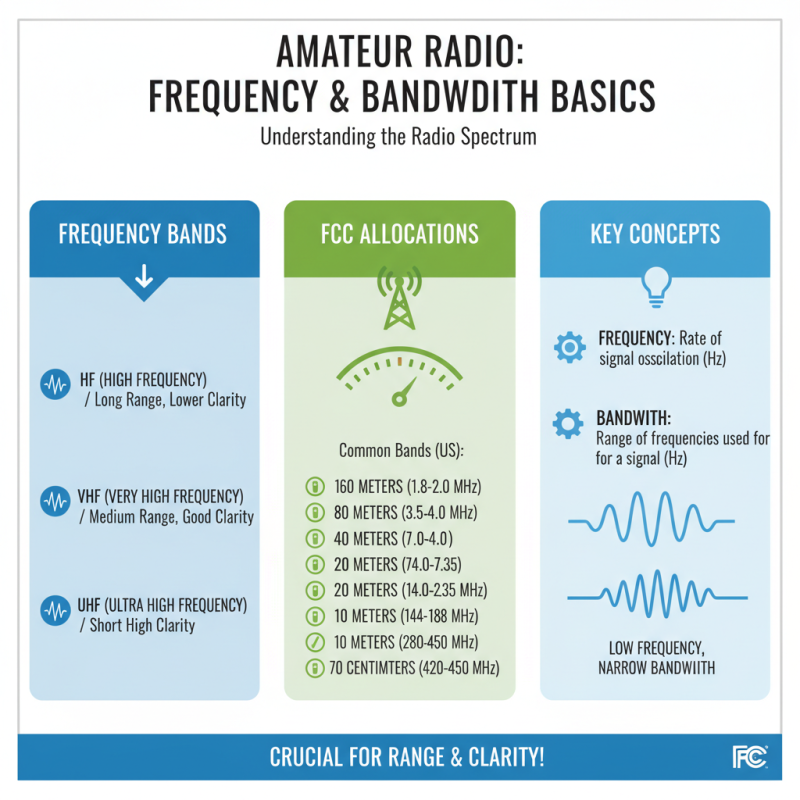
Understanding frequency and bandwidth is crucial in amateur radio. The radio spectrum is divided into various frequency bands. These bands range from HF (High Frequency) to VHF (Very High Frequency) and UHF (Ultra High Frequency). Each band operates at a different frequency, influencing range and clarity. According to the FCC, amateur radio operators often use bands from 160 meters to 70 centimeters.
Bandwidth refers to the width of a frequency band. It impacts the amount of data transmitted and the quality of the signal. A wider bandwidth allows for faster data transmission. For instance, a typical FM transmission may use a bandwidth of 15 kHz. In contrast, single-sideband (SSB) voice signals typically occupy around 2.7 kHz. Misunderstanding these concepts can lead to poor communication quality.
Many amateur radio operators struggle to select the appropriate bandwidth for their needs. Some might limit themselves to narrow bandwidth settings, thinking it ensures clarity. However, this can result in distortion, especially in crowded bands. The ARRL reports that ideal bandwidth settings can vary significantly, depending on the mode of operation. Experimentation and practice are essential in mastering these aspects of amateur radio, allowing users to improve their communication skills over time.
Popular Uses and Applications of Handheld Amateur Radios
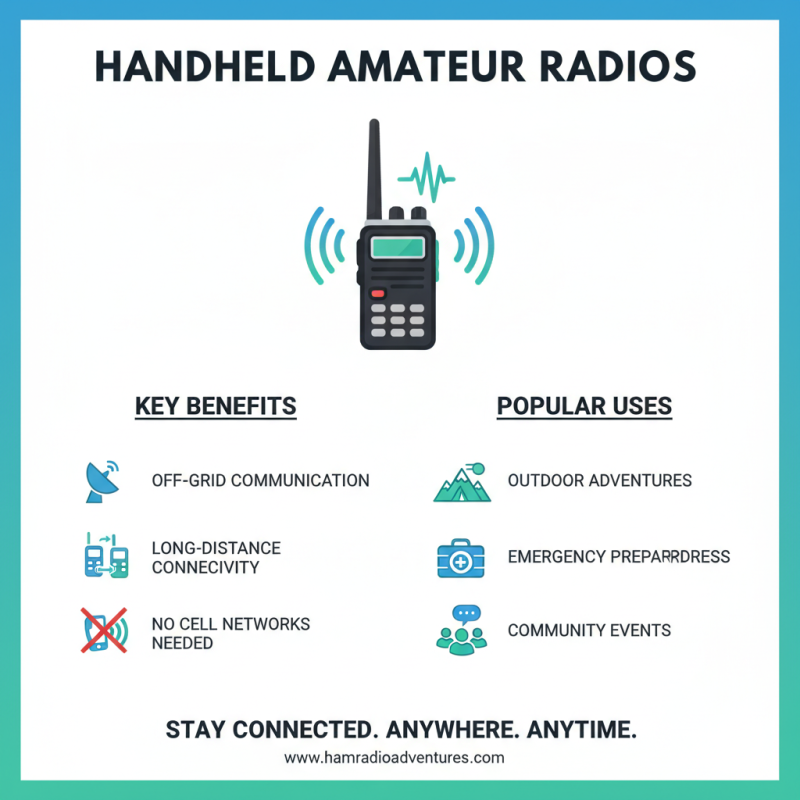
Handheld amateur radios are popular tools for communication among hobbyists and outdoor enthusiasts. These devices allow users to connect easily without relying on traditional cellular networks. The ability to communicate over long distances is particularly appealing. They are often used during outdoor excursions, camping trips, or even for casual gatherings.
One popular application is for emergency situations. Amateur radio operators can provide critical communication when other systems fail. They can help locate missing persons or provide updates during natural disasters. Users often report a sense of community when participating in local radio nets. However, not everyone is trained effectively. Some may misinterpret signals or struggle with equipment.
Another interesting use is in public events, such as marathons or bike races. Volunteers often carry handheld radios to coordinate logistics. This makes communication seamless among various teams. Sometimes, issues arise in crowded areas. Radio interference can lead to misunderstandings. It’s a reminder that, while powerful, these tools need skilled operators for effective use.