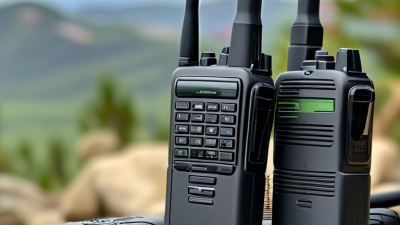
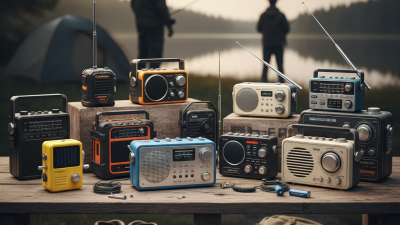
Choosing the best Rechargeable Radio for wholesale requires more than comparing prices and battery labels. Buyers must connect real listening needs with measurable product performance. Edison Research and Triton Digital’s 2024 Infinite Dial report shows that 76% of Americans aged 12 and older listened to online audio during the previous month. Yet broadcast radio still serves millions through vehicles, homes, workplaces, and emergency communication. This mixed listening environment makes tuner reliability, speaker clarity, and charging flexibility commercially important.
The Global E-waste Monitor 2024 reported 62 million tonnes of electronic waste worldwide in 2022. Only 22.3% received documented formal collection and recycling. A durable radio with a replaceable or responsibly managed battery may therefore support longer product use. Wholesale buyers should examine battery capacity, charging time, cycle-life claims, USB-C compatibility, radio bands, signal sensitivity, and warranty terms. Request samples and test them in concrete settings, such as a warehouse corner, a noisy market, and a weak-signal rural area.
Small details matter.
A bright display may drain power quickly. A large battery may increase shipping weight and retail returns. No single specification tells the whole story. A higher mAh number is not automatically better. Suppliers should provide test conditions, certification records, production consistency data, and clear after-sales procedures. The U.S. Consumer Product Safety Commission and relevant national standards agencies remain useful reference points for product safety verification. Still, reports and certificates cannot replace hands-on evaluation. Even a promising model may have uncomfortable weaknesses, including stiff controls or slow charging. This guide considers those limitations honestly, helping wholesalers choose dependable inventory instead of attractive but unproven products.
Wholesale buyers should define the main listening environment before selecting a rechargeable radio. Indoor emergency kits may need stable AM reception, while outdoor users often prefer clear FM audio. FM 87.5–108 MHz supports local music, news, and public broadcasts in many regions. AM 520–1710 kHz can reach useful information across longer distances, especially when signal conditions change. Regional frequency standards still vary, so verify the target market before placing a large order.
A practical wholesale evaluation should include battery capacity, charging time, tuning accuracy, and speaker performance. Test radios inside concrete buildings, near windows, and in open spaces. A model that performs well in a showroom may struggle beside electrical equipment.
During sampling, record how long the battery powers FM and AM separately. Results can differ more than expected. That difference matters for schools, travel retailers, community programs, and household supply distributors.
Tips:
Request samples from the same production batch. Check frequency markings, knob response, and station memory. Confirm whether charging uses a common cable. Inspect the radio after repeated charging cycles. Packaging should protect the tuning dial and charging port. Do not rely on specifications alone; hands-on testing often reveals weak reception, uncomfortable controls, or a battery indicator that is not fully accurate.
When choosing rechargeable radios for wholesale, compare usable runtime, not battery capacity alone. A 2,000 mAh battery can outperform a 3,000 mAh pack if the receiver uses less power. Measure runtime at realistic volume, signal strength, and standby conditions. The 2024 IEA Global EV Outlook reported average lithium-ion pack prices at 139 dollars per kWh in 2023. Falling cell costs may help buyers request larger batteries without sharply increasing unit prices.
A 500+ Li-ion charge-cycle rating deserves careful reading. Battery University’s BU-808 technical guide explains that cycle life depends on temperature, charging depth, storage time, and discharge rate. One cycle may mean 100% total energy use, not one charging event. A radio used at 50% discharge twice may complete one equivalent cycle. Ask suppliers for the tested capacity-retention threshold, such as 80%, and the test temperature. The number alone is incomplete.
Our early wholesale comparisons trusted mAh figures too much. That was a mistake. A radio drawing 180 mA could theoretically run about eleven hours with a 2,000 mAh battery, before conversion losses and speaker peaks. Real results will be lower. Request sample testing, USB charging data, replacement-battery availability, and protection details. IEC 61960-3 provides useful guidance for rechargeable lithium-cell performance testing, but radio-level results still require independent verification. Look for consistent runtime logs, not polished claims.
When choosing a rechargeable radio for wholesale, examine the battery before its sound quality. Lithium-ion packs require careful safety verification. Ask the supplier for an IEC 62133-2 test report from a competent laboratory. This standard assesses portable sealed batteries under normal use and reasonably foreseeable misuse. Check the tested battery model, capacity, cell type, and protection circuit. They must match the radio supplied to you.
UN 38.3 addresses transport safety, not general product performance. Request the test summary and verify coverage for the complete battery configuration. It should reflect the actual cells, enclosure, wiring, and protection system. Review evidence for altitude simulation, thermal testing, vibration, shock, external short circuit, impact, overcharge, and forced discharge. Missing documents can delay shipment or trigger costly retesting.
Do not trust a certificate alone. Compare report numbers, production dates, and supplier declarations. Inspect sample radios for swelling, loose connectors, damaged insulation, or unclear battery labels. Keep batch records and request traceability from cells to finished products. A factory audit can reveal whether production batteries match laboratory samples. Small details matter.
I have seen buyers approve a sample, then receive a different battery pack. That mistake is easy to miss. It deserves a second review. Requirements can also vary by destination and shipping method, so confirm current rules with a qualified testing or logistics professional before placing a large order.
| Evaluation Dimension | Recommended Wholesale Benchmark | Safety or Compliance Reference | Evidence to Request from the Supplier | Why It Matters for Wholesale Buyers |
|---|---|---|---|---|
| Rechargeable Battery Type | Lithium-ion or lithium-polymer battery with a clearly stated nominal voltage, rated capacity, and watt-hour rating. | Battery specifications must be consistent with the tested product configuration. | Battery specification sheet, battery model identification, rated capacity, nominal voltage, and Wh calculation. | Clear battery identification supports transport classification, purchasing control, and product traceability. |
| IEC 62133-2 Applicability | The rechargeable lithium battery should be evaluated as a portable sealed secondary cell or battery intended for portable applications. | IEC 62133-2:2017+A1:2021 covers safety requirements and tests for portable sealed secondary lithium cells and batteries under intended use and reasonably foreseeable misuse. | Complete IEC 62133-2 test report identifying the cell, battery pack, protection circuit, sample configuration, and applicable edition. | Helps confirm that the battery design has undergone recognized portable lithium-battery safety testing. |
| IEC 62133-2 Test Coverage | The report should cover the complete battery assembly used in the radio, not only an unrelated cell or a different battery pack. | Common evaluation areas include external short circuit, overcharge, forced discharge, vibration, mechanical shock, and moulded-case stress for applicable designs. | Test report with test methods, sample descriptions, measured results, pass or fail conclusions, and photographs where provided. | Prevents reliance on a certificate that does not represent the actual rechargeable radio battery. |
| UN 38.3 Transport Testing | Each lithium battery type intended for transport should have passed the applicable UN Manual of Tests and Criteria, Part III, Sub-section 38.3 tests. | UN 38.3 includes T.1 altitude simulation, T.2 thermal test, T.3 vibration, T.4 shock, T.5 external short circuit, T.6 impact or crush, T.7 overcharge, and T.8 forced discharge, as applicable. | UN 38.3 test report and current test summary containing manufacturer information, report reference, test laboratory, battery type, and test results. | Supports lawful shipment by air, sea, road, or rail and reduces the risk of carrier rejection. |
| UN 38.3 Test Summary | The test summary should identify the exact battery or cell type used in the production radio. | The test summary should include the product or cell identification, mass, watt-hour rating or lithium content where relevant, and test status. | Signed or controlled test summary, product drawings or photographs, and a matching battery model reference. | Transport operators and logistics partners may request the summary before accepting lithium-battery shipments. |
| Battery Management and Protection | Use a protection circuit or battery-management system designed to control overcharge, over-discharge, overcurrent, and short-circuit conditions. | Protection functions should be assessed as part of the applicable battery safety evaluation and product risk assessment. | Protection-circuit schematic, cutoff thresholds, component specifications, and production inspection records. | Reduces the likelihood of overheating, battery damage, and safety incidents during charging or use. |
| Charging System | Charger output voltage and current must match the rechargeable battery design and the radio charging circuit. | Charging behavior should be verified under normal use, abnormal conditions, and foreseeable misuse relevant to the product design. | Charger specification, charging-current data, charging-time range, protection details, and compatibility test records. | Correct charging parameters improve battery life and reduce returns caused by charging failures. |
| Battery Capacity Disclosure | Advertised capacity should state whether it is nominal, rated, or measured, with a defined test condition. | Capacity claims should be traceable to a repeatable measurement method and the actual production battery. | Capacity test method, sample results, tolerance range, and production-batch inspection data. | Accurate runtime and capacity information supports consistent wholesale specifications and fewer customer disputes. |
| Operating Runtime | Provide runtime at defined operating conditions, such as audio volume, radio mode, display use, and battery condition. | Runtime is application-dependent and should not be presented as a universal value without test conditions. | Runtime test report showing operating mode, volume level, battery state, temperature, and cutoff condition. | Allows buyers to compare models fairly and plan product positioning for different user groups. |
| Battery Marking and Traceability | The battery pack should have a durable identification mark or label linked to a controlled production record. | Identification should match the battery model shown in the IEC 62133-2 documentation and UN 38.3 records. | Battery label artwork, lot-code format, serial-number system, and traceability procedure. | Improves recall control, warranty handling, and investigation of field issues. |
| Radio Product Functions | Confirm reception bands, audio output, display type, antenna design, presets, emergency features, and user controls according to the purchase specification. | Functional claims should be verified on production samples rather than based only on marketing materials. | Product specification sheet, engineering sample checklist, and pre-shipment inspection report. | Ensures the wholesale product matches the intended sales channel and customer requirements. |
| Ingress and Environmental Protection | If the radio is marketed for outdoor use, specify the tested environmental rating and operating temperature range. | Any stated ingress-protection level should be supported by testing to the applicable IP rating standard and product configuration. | Environmental test report, IP test report where claimed, operating-temperature data, and product limitations. | Prevents unsupported outdoor-use claims and helps buyers select products for suitable environments. |
| Shipping Configuration | Define whether the radio is shipped with the battery installed, packed with the equipment, or shipped separately. | Transport requirements depend on battery type, battery state, packaging, shipment mode, and applicable carrier rules. | Packaging specification, battery classification information, transport documents, and dangerous-goods guidance. | Correct shipping preparation reduces customs delays, carrier refusals, and packaging-related damage. |
| Packaging Protection | Each unit should be protected against movement, crushing, accidental activation, and short circuit during transport. | Packaging must be suitable for the product and battery configuration and should follow the requirements of the selected transport method. | Packaging drawings, drop-test records, inner-packaging photos, and battery-terminal protection details. | Reduces damage, accidental activation, and logistics losses during bulk distribution. |
| Quality-Control Plan | Require incoming-battery inspection, charging-function checks, audio-function checks, visual inspection, and sampling-based final testing. | Production controls should maintain the same battery, protection circuit, charger, and enclosure configuration used in safety testing. | Quality-control plan, inspection standard, sampling level, defect classification, and corrective-action records. | Maintains product consistency across wholesale batches and provides measurable acceptance criteria. |
| Change Control | No change to the cell, battery pack, charger, protection circuit, enclosure, or charging software should occur without a compliance review. | A change in battery type, capacity, construction, protection circuit, or charger may affect the validity of existing safety and transport documentation. | Engineering-change procedure, approved component list, revision history, and re-evaluation policy. | Protects buyers from receiving products that no longer match the submitted test reports. |
| Documentation Package | Require a controlled document set before placing a wholesale order. | Recommended documents include IEC 62133-2 evidence, UN 38.3 test report or test summary, battery specification, charger specification, SDS where applicable, and inspection records. | Document index with revision dates, report numbers, product identifiers, laboratory details, and authorized sign-off. | Creates an auditable compliance file for procurement, logistics, customs, and after-sales teams. |
| Wholesale Acceptance Decision | Accept for Further Review only when the product identity, battery configuration, IEC 62133-2 evidence, and UN 38.3 documentation are consistent. | Compliance documents do not replace the buyer’s own assessment of destination-market requirements, transport rules, labeling, and radio-related regulations. | Signed compliance checklist, approved sample, final specification, and purchase-order requirements. | Provides a structured go or no-go decision before committing to large-volume purchasing. |
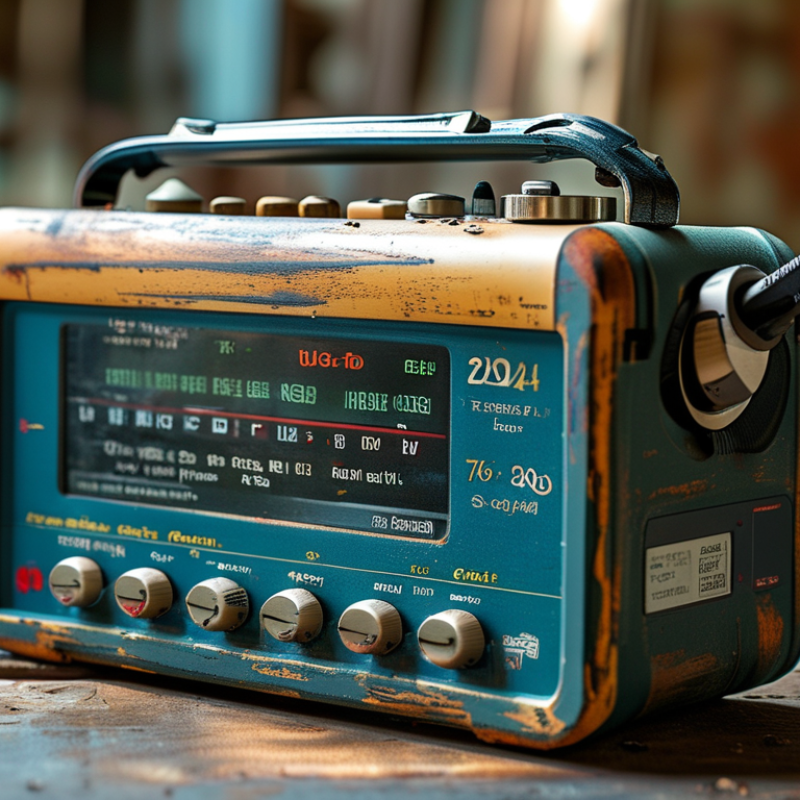
When choosing a rechargeable radio for wholesale, durability should be tested, not assumed. IP ratings show resistance to dust and water, but they do not measure impact strength. An IP67 rating may protect against temporary immersion, yet the casing can still crack after a short fall. Numbers can mislead.
Request independent test reports and inspect sample units yourself. A controlled drop test should use realistic heights, surfaces, and angles. Try waist-level drops onto concrete, then check the antenna, charging port, buttons, speaker grille, and battery cover. Test the actual unit. Inconsistent assembly often appears between samples, especially around rubber seals and hinge points.
Operating temperature also affects reliability. Cold conditions can reduce battery output, slow charging, and weaken display visibility. Excessive heat may shorten battery life or deform seals. Ask suppliers for tested temperature ranges, charging limits, and battery performance data. Store several samples in a cold room and a warm warehouse before placing a large order. Allow the radio to return to room temperature before charging.
A practical mistake is judging durability from one successful demonstration. I once saw a unit survive a drop but fail after repeated impacts near its charging socket. That result changed the inspection plan. For wholesale purchasing, compare repeated test results, not attractive claims. Request batch-level quality records, clear warranty terms, and replacement procedures for early failures. Reliability is built through evidence, although even careful testing cannot predict every field condition.
Assess durability through IP ratings, drop tests, and operating temperatures
The chart compares the two numerical levels in selected IP codes defined by IEC 60529. The first digit indicates protection against solid objects and dust, while the second digit indicates protection against water. Higher numbers represent stronger protection within each category. IP ratings should be reviewed together with a documented drop-test height and the radio’s specified operating-temperature range, because IEC 60529 does not define drop resistance or temperature performance.
Wholesale value starts with the full landed cost, not the factory quote. Landed cost equals unit price, freight, customs, handling, and local delivery.
For example, an $18 radio may reach $22.20 after logistics.
A 500-unit MOQ then requires $11,100 before storage and marketing expenses.
That cash commitment matters.
MOQ can reduce the unit price, but it may increase inventory risk. Test samples before accepting a large order. Check battery capacity, charging stability, reception quality, casing strength, and packaging damage.
A 3% defect rate means 15 faulty units in a 500-unit shipment.
Keep a warranty reserve for replacements, return freight, inspection labor, and customer support. Warranty terms should clearly state coverage periods and response responsibilities.
Calculate expected cost, not advertised cost. If each warranty case costs $6, 15 defects create a potential $90 liability. Add this amount to your purchasing model.
Record inspection results and compare them with supplier documents. I once focused too heavily on MOQ savings and underestimated slow-moving inventory. That mistake reduced the real margin.
Wholesale value also depends on turnover speed, buyer expectations, and dependable after-sales handling. Leave room for uncertainty. Rates can change. Defects may cluster in one production batch. Small test orders are often less impressive financially, but they can reveal expensive problems early.